Mental Health Awareness Month
This is the first of two articles I’ve planned for May which is designated as Mental Health Awareness Month. Both will illuminate ways to navigate through life’s ups and downs. This includes challenges from lost friendships and love as experienced through my own circumstances.

I recently thought I had reached the stage of my twenty-seven-month healing journey. I believed I could start focusing on future relationships. I felt at ease with myself.
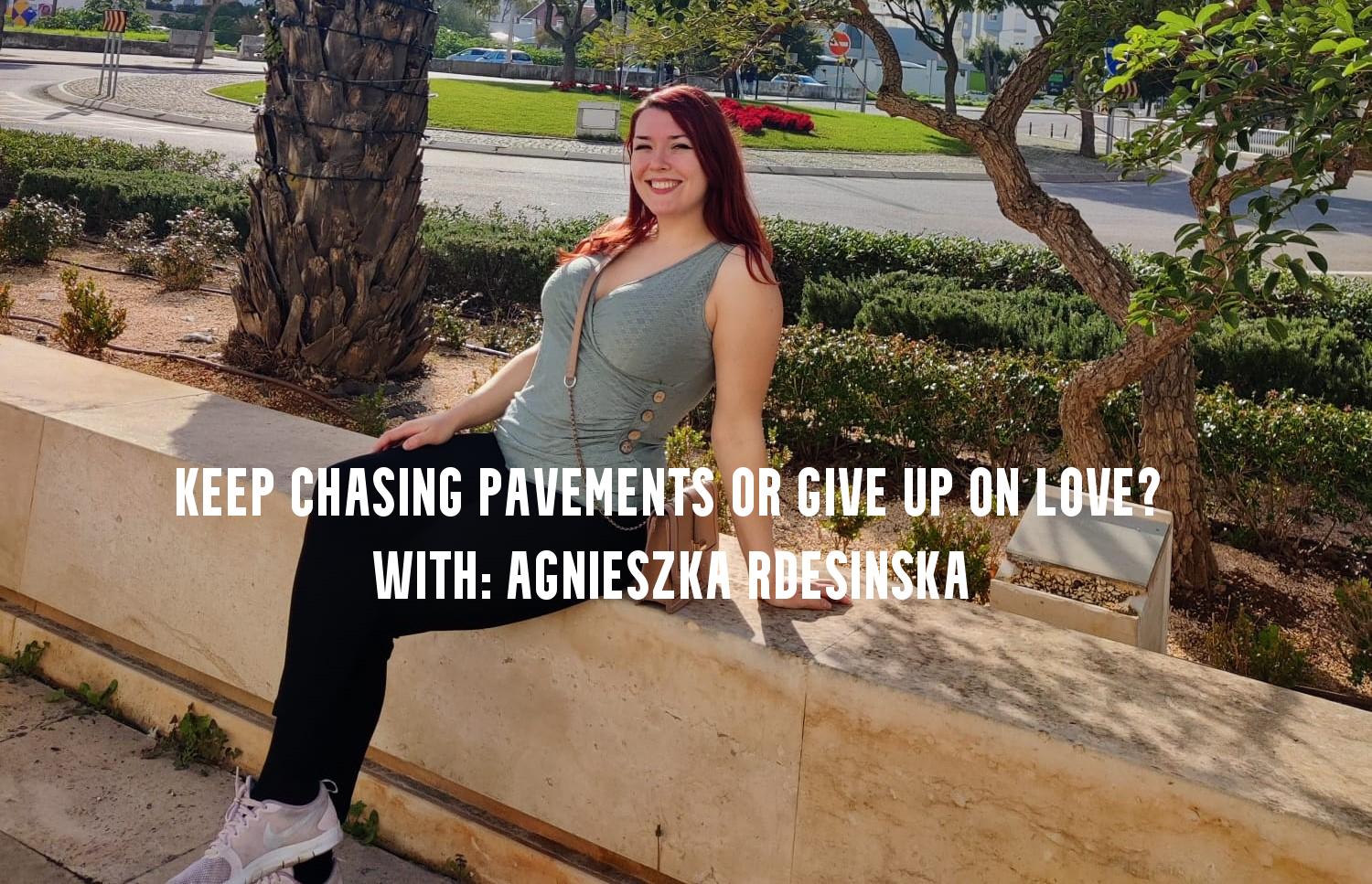
I asked RTT Hypnotherapist and NLP Coach Agnieszka (Agnes) Rdesinska to help me once more. I had a few lingering thoughts about the direction of my future.
Heading into the interview, I assured myself of one thing. I was just trying to figure myself out. And would I seek a serious relationship with again? Did I even want that?
But I must say, her responses were deeper than I had anticipated.
I am in the crosshairs of wanting to date again. Alternatively, I could lie low in my own peacefulness. This was one decision I needed to make. Thoughts of becoming what I fear the most roam in my mind. I fear a conflict between being a serial dater and the monogamy I believe in. Most importantly is the question, after all the pain and grief I’ve endured, is love even worth it.
We began the interview as planned. But a full out session with ‘More to Lose‘ than I hoped ensued. More proof ‘healing isn’t linear‘.
Me
I don’t know if I’ve actually said it so simply to you as this, ‘I’m giving up on love’.
I’m not to this juncture yet, but the thought has definitely crossed my mind. I’m through the shock, pain, grief of her.
Why shouldn’t I just say I’m done, love isn’t worth it mentally?
Agnes
That’s such a human question. And not a superficial one at all. Honestly, I think most people who’ve loved deeply and been hurt have thought it—Is it really worth it?
You’ve already walked through the hardest parts—shock, grief, heartbreak. It makes sense that now your mind is trying to protect you from ever feeling that again. Of course it says, “Let’s just shut the door.” That’s your nervous system trying to guard your heart. It’s not weakness. It’s survival.
But giving up on love entirely isn’t the same as protecting yourself wisely. And I don’t think your heart really wants to give up—it wants to be safe. It wants to be seen, met, chosen.
The problem isn’t that you’re not lovable or that love is a lie. The problem is that you’ve been trying to love people who couldn’t receive or return it. And that hurts in a very specific way—it mirrors something old, deep, and familiar. Something that started long before “her.”
I don’t like referring to being alone as a form of peace. It’s no more calming than saying someone leaving you brings peace. But once you’ve overcome the grief, what sets the mind in believing we don’t need it anyone? Is it normal in breakups?
Yes, it’s normal after heartbreak to feel like you don’t need anyone anymore. That can show up as a kind of self-protection. After pain, the mind often builds armor: If I don’t let anyone in, I can’t be hurt again. It feels like strength, and in a way it is—but it can also be loneliness in disguise.
But I don’t think true peace is found in saying “I need no one.” I think peace is found in saying, “I know I can be okay on my own. And I’m also open to connection—if and when it’s safe, mutual, and real.”
And like healing itself, is the feeling not linear as well?
And yes—just like healing, that feeling isn’t linear. There are days when solitude feels sacred, strong, even peaceful. And there are days when it feels like exile. Neither is the full truth. They’re just moments on the path.
Sometimes the belief that we don’t need anyone is a phase of healing—part of restoring self-trust. And sometimes it’s a form of quiet despair. The key is to stay curious, not rigid. You’re allowed to evolve. You’re allowed to need, and to not need. You’re allowed to outgrow people, and still long for connection. It’s all valid.
I bring this up to look at my morality and thoughts. I still believe just because everyone is doing it, doesn’t make it right. Do what is right even if everyone is doing wrong.
Also, I’m going to use ‘your own words’ from one of our conversations. “Whenever I think of my adventure on threads, I feel like I didn’t really get everything out of it. I could have. Then, I think of the friendship I got with you. And it was all worth it.”
Why is someone’s friendship ‘worth it’? Why is not wanting to be in a monogamous relationship read by society as being wrong?
That’s such a powerful question. And I hear you—just because something is common doesn’t make it right. But also… just because something is uncommon doesn’t make it wrong either.
When I said our friendship made the whole journey “worth it,” I meant that connection—real, meaningful connection—is always worth something. It doesn’t need to look like what society tells us it should look like: monogamy, marriage, 2 kids. That model might work for some, but not for everyone. What matters more is truth, mutual respect, and emotional honesty.

How do our minds associate with not being committed? I’m just going to date whoever and how many I want. This approach has no commitment nor ramifications.
I do think that for some people, choosing non-monogamy (or a refusal to commit at all) can come from the same place of self-protection as giving up on love entirely. If love hurt, commitment can feel like a risk. So, it can feel safer to avoid depth, or to spread connection thin across many people, so no one gets too close. But that’s not always the case. Non-monogamy can also come from a deep understanding of oneself, from a place of emotional abundance rather than fear.
What I’d gently invite is this: not to label one path as “right” or “wrong,” but to ask—what’s the motivation?
- Is the choice to avoid monogamy coming from desire? Or fear?
- Is it about expanding love, or avoiding intimacy?
- Is it rooted in empowerment—or escape?
What type of harm can come from this attitude?
There’s nothing inherently harmful about not wanting to commit, as long as everyone involved is informed, respected, and emotionally safe.
But harm can come when someone says, “I’m just going to do whatever I want, with whoever I want, and I owe no one anything.” Because even in non-monogamous dynamics, there’s still responsibility. There’s still care. Human hearts are never truly casual.
So maybe the real question isn’t “Is this right or wrong?” but “Is this honest?” Honest with yourself, and with those you bring into your life. Because in the end, the form of the relationship matters less than the quality of it. Love—whether in friendship, monogamy, polyamory, or something undefined—asks us to show up with truth. That’s what makes it worth it.

I used to believe all people held a form of inherent truth within them. But now I’m not so sure everyone knows right from wrong. I don’t think wanting to be single is wrong. But is it right to want to be in more than one relationship at a time?
That’s my morality battle now. Seems much easier in this generation to find someone to sleep with first. Then see how it goes afterwards as opposed to old fashioned dating.
I think your question already shows deep self-awareness. Wanting more than one relationship isn’t inherently wrong—it depends on honesty, consent, and emotional integrity. The harm usually comes when people aren’t clear with themselves or others, when freedom becomes a shield to avoid vulnerability.
If it makes me happy and whoever I’m with at happy, why should I adapt my morality to it?
If it truly makes both you and the people you’re with feel seen, respected, and emotionally safe, then it’s not about adapting your morality. It’s about aligning your actions with your truth. The key is to check: Am I choosing this from love or from fear? From clarity or from confusion?
What harm mentally could it cause if I did?
The mental harm happens when we ignore what we really need, or when our choices start to conflict with our deeper values. So stay curious. Keep asking the hard questions like this—that’s how you stay rooted in integrity, whatever shape your relationships take.
Advice
Not only have you been guiding me through therapy, you and I have become great friends as well. Turn the therapist in you off and as a FRIEND give me your advice.
I get why your mind is turning this over. You’re not someone who takes connection lightly, and that’s part of what makes you special. Wanting more than one relationship isn’t wrong, especially not if everyone involved is clear, open, and genuinely okay with it. But I’d just say: make sure you’re not choosing “freedom” to protect yourself from being hurt again. You deserve love that’s deep and safe. Not love that feels like a constant balancing act just to avoid feeling too much. Ask yourself not just “Does this make me happy right now?” but “Will this feel good for my heart six months from now?” Because you deserve something that lasts, in whatever form that takes.
Now turn the friendship in you off and give it straight to me from the therapist in you?
It’s smart to explore both your relationship choices and your sense of morality. Because morality is just a set of beliefs shaped by upbringing, culture, and past experiences. It’s worth asking: Where did these beliefs come from? Do they still reflect who I am today?
The tension you’re feeling may not be about right or wrong, but about whether your actions align with your deeper values. That’s where clarity comes from—not from judging the relationship model, but from understanding what truly fits who you are now.
Finally, where do you think I’m at in this healing, moving on, getting over or whatever it’s called stage of grief?
Am I even ready for a relationship without hurting myself further or any potential dates?
When it comes to heartbreak, these are the stages of grief:
Shock & Denial
Disbelief that the relationship is really over.
Feeling emotionally numb or acting as if everything is normal.
Pain & Guilt
Intense sadness, longing, or emotional pain.
Thoughts like “Was it my fault?” or “I should’ve done something differently.”
Anger & Resentment
Anger at your ex, yourself, or the situation.
Feelings of betrayal or unfairness.
Bargaining
Attempts to get back together or fantasizing about reconciliation.
“Maybe if I change, they’ll come back.”
Depression
Hopelessness, loss of motivation, withdrawal from others.
Feeling like you’ll never find love again.
Reconstruction
Beginning to rebuild your identity and life without the other person.
Discovering new routines, focusing on personal goals.
Acceptance & Growth
Peace with the breakup.
Gaining insights, learning from the experience, and being open to future relationships.
These stages aren’t linear, it’s normal to bounce between them before you can truly move on. I’m sure you can recognize these feelings – where do you think you are right now?
“Right now, I’d say I am bouncing between ‘Bargaining – Acceptance and Growth.’ But as we’ve talked before, I’ve seemed to have bypassed that ‘Anger & Resentment’ stage. It’s not in me”
You asked me: ‘Am I even ready for a relationship without hurting myself further or any potential dates?’. That’s a powerful question—and the fact that you’re asking it already shows so much care and self-awareness. Most people rush into dating without ever pausing to ask if they’re ready, and that’s often where hurt begins.
Being ready for a relationship doesn’t mean you have no fear, no wounds, or that you’ve figured everything out. It just means you’re willing to be honest—with yourself and with anyone you let in.
But if deep down you feel you’re still carrying too much grief, anger, or emotional exhaustion, then maybe the kindest thing you can do, for yourself and others, is to take a bit more time. Maybe time to explore why you keep falling for women who keep breaking your heart.

Writer’s Note:
Afterward, Agnes and I went on to discuss one of her suggestions here. Although it’s not included in this article, it was asked of my next guest Jodika McKinley in the second article for Mental Health Awareness Month. She’s also a hypnotherapist along with a love and relationship coach. It will be released in a week or so.
I’d like to thank Agnes from the bottom of my heart for all her help this past year and a half. Seriously I don’t know where I’d be without her professionalism and friendship. A direct link to her website is highlighted above with her introduction in blue.
Consider making a small donation (I sure could use it) to help keep my website afloat at JustMeRic. And check out my Amazon Creator Storefront. There you’ll see some of the awesome purchases I’ve made and recommend. Yes, I earn a small commission when you shop there. You can also find all of my sites in one place on my Linktree page. If you enjoy what you read here, please subscribe to my email list at the bottom of the page.
dailyprompt-1937


Leave a Reply